Choosing your LED bulbs wisely: Lumens, Kelvins and Watts
No more Watts, we're talking in Lumens. How not to make a mistake and have beautiful light?
Recommended Materials
- LED bulbs
Steps to follow
Step 1
Forget Watts, think Lumens: With old bulbs, we looked at Watts (W) to know if it lit brightly. With LEDs, the Watts just indicate the consumption (very low). For brightness, you have to look at the LUMENS (lm).
Step 2
- 200 to 400 lm: Ambient lighting, bedside lamp, night light.
Step 3
- 800 lm: This is the standard for lighting a room (equivalent to an old 60W bulb).
Step 4
- 1000 to 1500 lm: Powerful lighting for a kitchen, a work surface, a garage or a large room.
Step 5
Color temperature (Kelvins): This is what defines the ambiance of the room. It is noted in 'K'.
Step 6
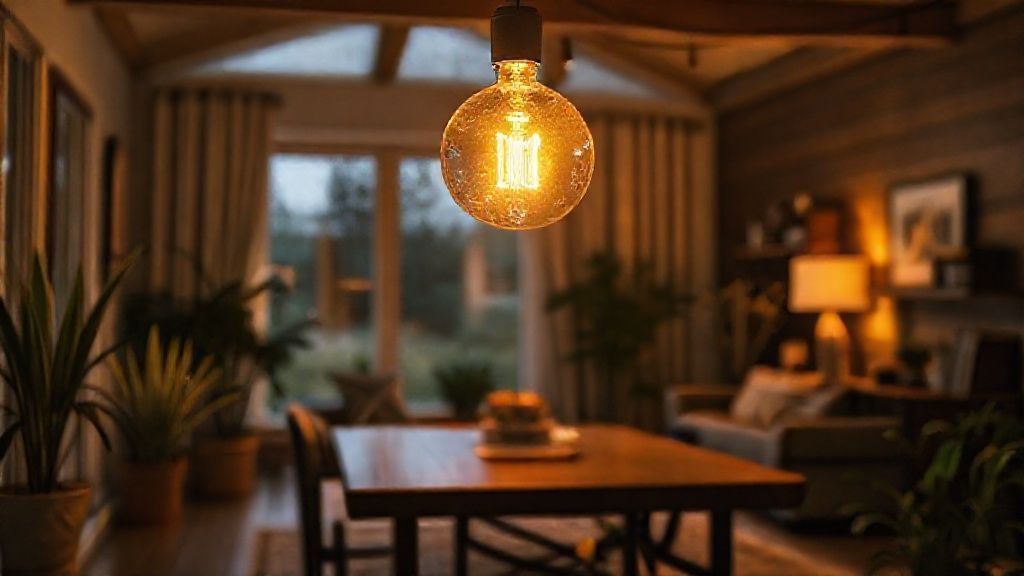
- 2700K to 3000K (Warm White): Yellow light, soft and warm. Ideal for the living room, bedroom, living rooms. It gives a cozy feel.
Step 7
- 4000K (Neutral White): White light, close to daylight. Ideal for the bathroom (for applying makeup), the kitchen or the office. We see the true colors better.
Step 8
- 6000K and more (Cold White): Very harsh bluish light. Reserve for the garage, cellar or outside. Avoid in living rooms (it looks like a hospital).
Step 9
The socket: Check your socket carefully before purchasing. E27 (Large standard screw), E14 (Small screw for lamps), GU10 (Pin spots that can be turned), G9 (Small pins).
Frequently Asked Questions
Dimmable or not ?
If you have a dimmer switch on the wall (a knob that turns), you MUST purchase LED bulbs marked 'Dimmable' or 'Dimmer Compatible'. Otherwise, they will flash, sizzle or burn out very quickly.
Precautions
- Recycle LED bulbs (they contain electronics).
- Do not look at the powerful LEDs directly (blue light).