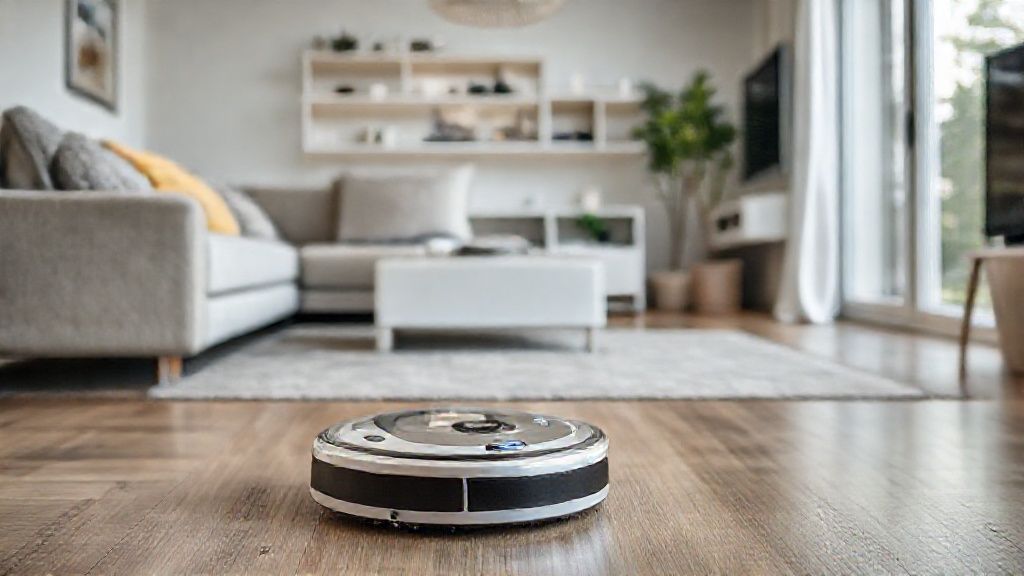
Robot Vacuum: Gadget or Real Cleaning Aid?
They vacuum, they mop, they empty themselves... Robot vacuums have evolved a lot. How to choose the one that will truly free you from the chore?
Recommended Materials
- Robot vacuum (Lidar or Camera)
- Emptying station (optional)
- Smartphone
Steps to follow
Step 1
Criterion #1 is navigation. Forget random movement robots (entry-level). Choose a model with a laser (Lidar) or a camera (VSLAM) that maps your home. It cleans methodically, misses no zones, and returns to its base without getting lost.
Step 2
Suction power (in Pascals, Pa) is important for carpets. Aim for at least 2000 Pa. For pet hair, check that the main brush is rubber (anti-tangle) rather than bristles.
Step 3
The mopping option: hybrid models wipe with a damp cloth. It's good for routine maintenance (fine dust), but it doesn't replace a real hand wash for stubborn stains, except for high-end models with rotating brushes.
Step 4
The automatic emptying station: this is true comfort. The robot empties its small bin into a bag located in the base. You don't have to deal with it for 1 or 2 months.
Step 5
Prepare your home: for the robot to work well, you need to 'robot-proof' your interior. Tidy up trailing cables, lift chairs if possible, avoid socks on the floor.
Step 6
Schedule it to run when you are not there (at work). What a pleasure to come home to a clean house every evening!
Frequently Asked Questions
Does it fall down stairs ?
No, they all have cliff sensors. But for safety, you can define a virtual 'no-go zone' in the app at the top of the stairs.
What about door thresholds ?
They generally cross thresholds up to 1.5 or 2 cm in height.
Precautions
- Empty the bin regularly if there is no station.
- Clean sensors and brushes (hair) once a week.