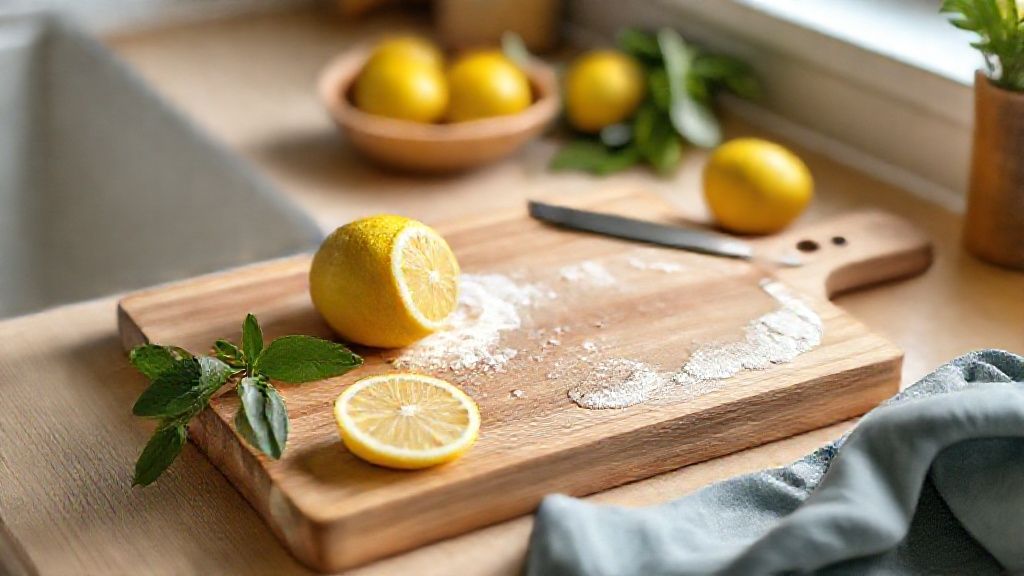
Cleaning and disinfecting a wooden cutting board
Wood is porous, bacteria hide there. But wood is also naturally antibacterial if well maintained.
Recommended Materials
- Coarse salt
- Lemon
- Edible oil (grapeseed or mineral)
- Scraper
Steps to follow
Step 1
Daily cleaning: After each use, wash the board in hot water with a little dishwashing liquid. Scrub well to remove food residue. Rinse. WIPE IT immediately with a cloth and let it dry UP in the open air. Never let it soak in water (it will warp and split) and never put it in the dishwasher.
Step 2
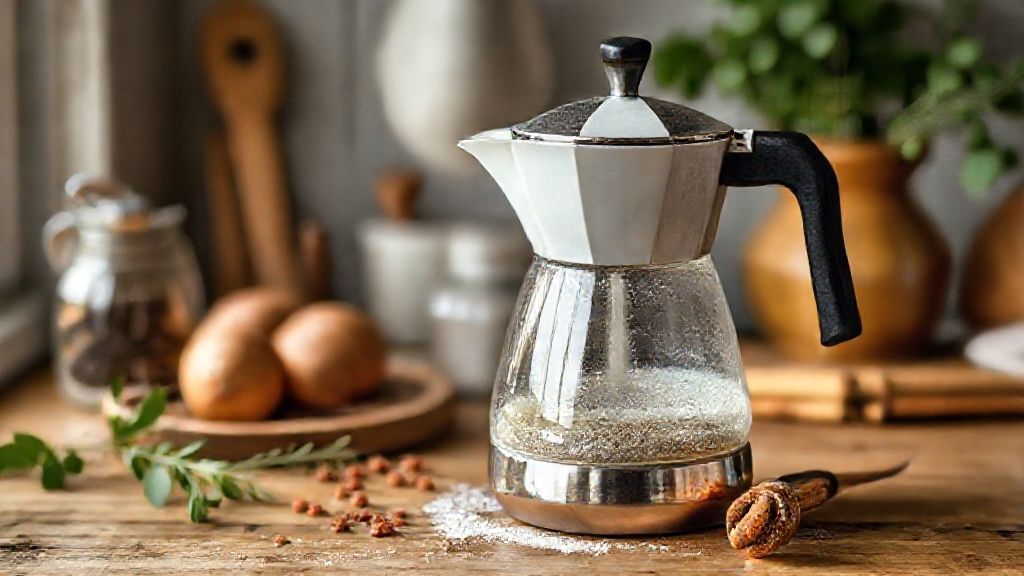
Disinfection (Monthly): To kill bacteria and remove odors (garlic, onion, fish). Sprinkle the board generously with coarse salt. Cut a lemon in half. Use the half lemon as a sponge to rub the salt on the wood. The salt acts as an abrasive which strips, and the acid from the lemon disinfects. Leave on for 5-10 minutes. Rinse and dry.
Step 3
Maintenance (Feeding the wood): Over time, wood becomes dry, gray and rough. You have to feed it so that it remains waterproof. When the board is completely dry, pour in a little neutral cooking oil (grapeseed oil, rapeseed oil, or special board mineral oil). Avoid olive oil which can go rancid and give a bad taste. Spread the oil with a cloth or paper towel. Leave the wood to drink overnight. Wipe off the excess the next day.
Step 4
Planing: If your board has too many deep cuts (microbe nests), you can sand it with sandpaper to find a smooth surface.
Frequently Asked Questions
Wood or Plastic ?
Contrary to popular belief, wood is very hygienic (it contains antibacterial tannins). The plastic scratches deeply and bacteria lodge there, impossible to dislodge even in the dishwasher.
Precautions
- Have one board for raw meat and another for vegetables/bread (cross contamination).
- Discard the board if it is too split.