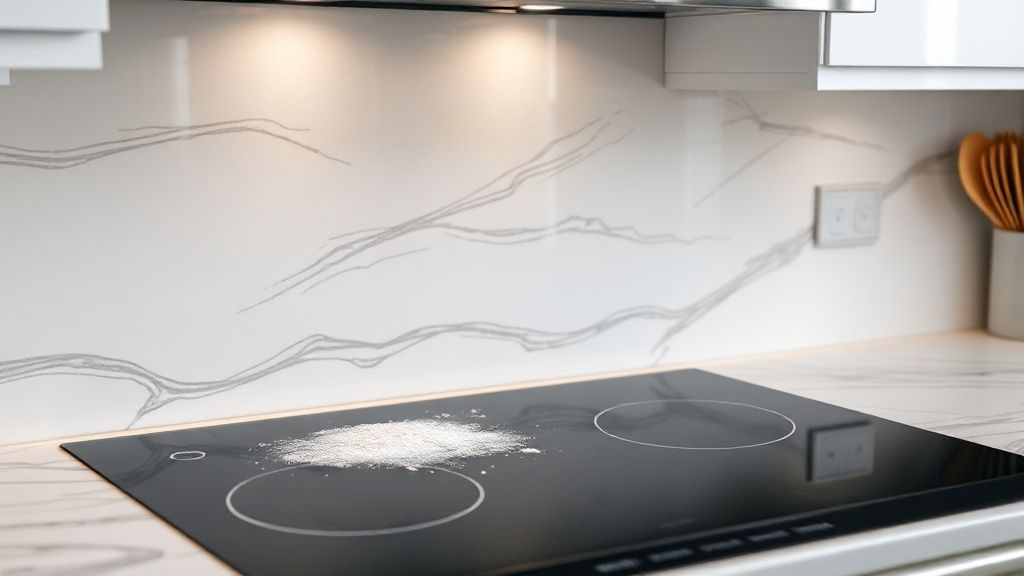
Cleaning a burnt induction hob without scratching it
Milk overflowed and charred? Green sponge is prohibited. Here's how to recover the glass.
Recommended Materials
- Window scraper (razor blade)
- Clay stone (or Blanc de Meudon)
- White vinegar
- Microfiber
Steps to follow
Step 1
The tragedy: Milk, pasta water or jam has overflowed and charred on the hot window. It's black, hard as a rock and impossible to remove with a sponge.
Step 2
The miracle tool (The scraper): Do not try to scratch with a knife (you will scratch the glass) or with a green sponge (ineffective). Buy a special glass-ceramic scraper (it's a handle with an interchangeable razor blade). It costs €5.
Step 3
The technique: Wait until the plate is cold (so as not to burn yourself), unless it is sugar or melted plastic (there you have to act hot otherwise it welds to the glass). Lightly wet the stain. Pass the scraper blade flat (30° angle). The burnt crust will peel off into chips without any effort and without scratching.
Step 4
Polishing: Once the bulk has been removed, a halo or greasy marks often remain. Use Clay Stone (or White Stone) on a damp sponge. Rub in small circles. It is a very fine natural abrasive that polishes glass without scratching it.
Step 5
The finish: Wipe with a microfiber cloth with a little white vinegar or window cleaner to make it shine brightly.
Step 6
Prevention: To avoid scratches, never slide the pans on the glass, lift them. Check that the 'bottom' of your pans is clean and smooth.
Frequently Asked Questions
Protective mat ?
On induction (and ONLY induction), you can put a special silicone mat or baking paper UNDER the pan to protect the glass. The magnetic field passes through the silicone.
Precautions
- Wait until the plate is cold (except in a sugar emergency).
- Never use abrasive scouring powder.