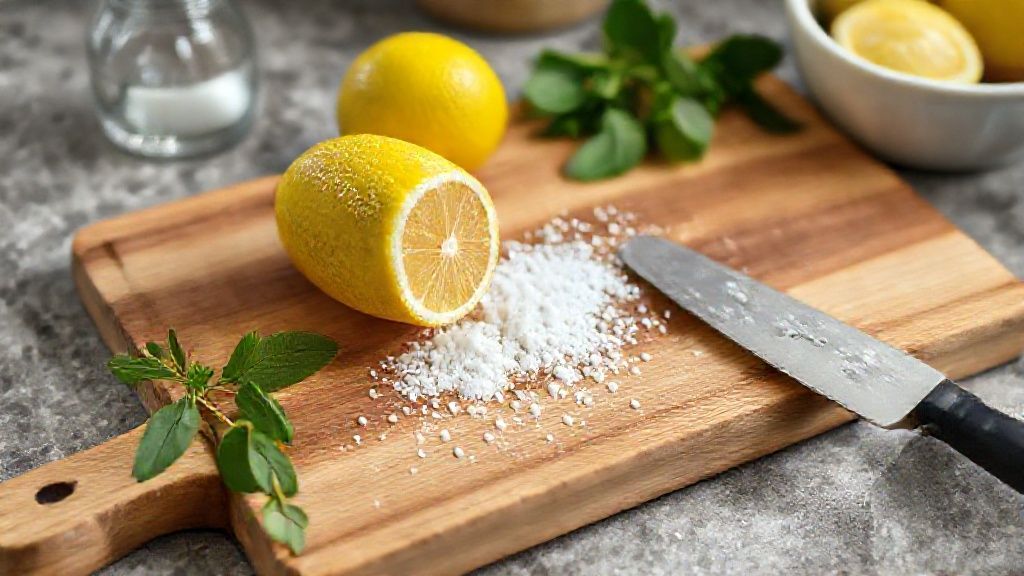
Maintain and Disinfect Your Wooden Cutting Boards
Wood is hygienic if well maintained. Here is how to clean, deodorize and nourish your boards so they last for years.
Recommended Materials
- Coarse salt
- Lemon
- Neutral food oil (grapeseed, rapeseed) or mineral oil
- Clean cloth
- Scraper or spatula
Steps to follow
Step 1
Daily maintenance is simple: after each use, wash the board with hot soapy water and scrub vigorously with a sponge. Rinse and wipe immediately. Never let it soak in water (wood swells, deforms and ends up splitting when drying).
Step 2
To disinfect and deodorize deeply (essential after cutting raw meat, fish or garlic): sprinkle the board generously with coarse cooking salt.
Step 3
Cut a lemon in half and use it like a sponge to rub the salt over the entire surface of the wood. Squeeze slightly to release the juice. The chemical reaction between citric acid (natural disinfectant) and salt (abrasive) will clean knife cuts deeply and kill bacteria.
Step 4
Let the salt/lemon mixture act for 5 to 10 minutes. You will see the salt change color by absorbing impurities.
Step 5
Scrape off the dirty mixture with a spatula or the back of a knife, then rinse quickly with hot water.
Step 6
Wipe the board immediately with a clean towel and let it dry standing vertically so that air circulates on both sides. If it dries flat, the underside will remain moist and moldy.
Step 7
Once a month, nourish the wood to protect it. Apply a generous layer of oil with a clean cloth or paper towel. Let the wood drink the oil overnight, then wipe off the excess the next day. This saturates the fibers, prevents water and meat juices from penetrating, and prevents cracks.
Frequently Asked Questions
Which oil to use ?
Avoid olive oil which can turn rancid and give a bad smell. Prefer a neutral oil (grapeseed, rapeseed) or, ideally, food-grade mineral oil (sold in pharmacies or DIY stores) which never turns rancid.
Is plastic more hygienic ?
Contrary to popular belief, not necessarily. Plastic boards scratch deeply and bacteria lodge and proliferate there, difficult to dislodge. Wood has naturally antibacterial properties (tannins) and heals better, provided it is well maintained.
Precautions
- Never put a wooden board in the dishwasher.
- Having a dedicated board for raw meat and another for vegetables/fruits is ideal to avoid cross-contamination.