Maintaining your non-stick pans so they last
The non-stick coating is fragile. A few steps to avoid scratching it and keeping it healthy.
Recommended Materials
- Soft sponge (not the green side)
- Wooden or silicone utensils
- Absorbent paper
Steps to follow
Step 1
The observation: Non-stick pans (Teflon, ceramic, stone, etc.) are practical but fragile. A scratch, and it's over: it sticks and can become toxic (particles in food).
Step 2
Golden rule #1: No metal! Ban metal forks, knives and spoons in the pan. Use only wooden, silicone or heat-resistant plastic spatulas.
Step 3
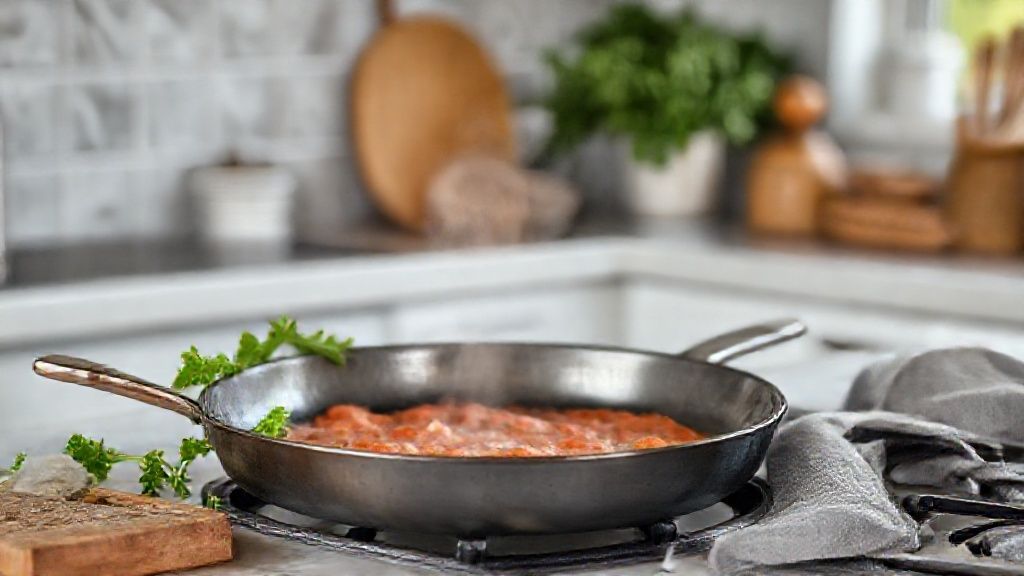
Golden rule #2: No overheating! Never heat an empty non-stick pan over high heat for a long time. Above 230°C, the coating degrades and emits harmful fumes. Always add a little fat or food as soon as you light the fire.
Step 4
Golden rule #3: No thermal shock! Never run your hot pan directly under cold tap water. The thermal shock (hot/cold) will deform the metal (the pan becomes convex and no longer touches the plate well) and weaken the coating.
Step 5
Washing: Wash by hand with a SOFT sponge (yellow side) and dishwashing liquid. Never use the abrasive green side (unless it is marked 'special non-stick'). Avoid the dishwasher: tablet detergents are very aggressive and eat away the coating little by little.
Step 6
Storage: If you stack your pans in the cupboard, the 'bottom' of the one above will scratch the inside of the one below. Place a sheet of paper towel, a tea towel or protective felt between each pan. This will significantly extend their lifespan.
Precautions
- Do not use cooking spray (contains additives which clog the coating).
- Discard the pan if the coating peels.