Optimizing kitchen cupboard and fridge storage
An organized kitchen saves time at every meal. Cooking zone, washing zone, stock zone.
Recommended Materials
- Glass jars
- Drawer organizers
- Additional shelves
Steps to follow
Step 1
Logical zoning (Activity triangle): Organize your kitchen by zones. Cooking Zone (pots, pans, spatulas) near the stove. Washing Zone (daily dishes, cleaning products) near the sink and dishwasher. Preparation Zone (boards, knives, spices) on the main worktop. Do not cross the kitchen to look for salt when cooking.
Step 2
Cupboard optimization: Use all available height. Add half-shelves (shelf risers) so as not to stack plates 30cm high. Install hooks inside doors for lids or small utensils. Put what you use once a year (raclette machine) at the very top or in another room.
Step 3
Organized drawers: A drawer without compartments quickly becomes a useless catch-all. Use modular drawer organizers to separate cutlery, kitchen utensils, rubber bands, etc.
Step 4
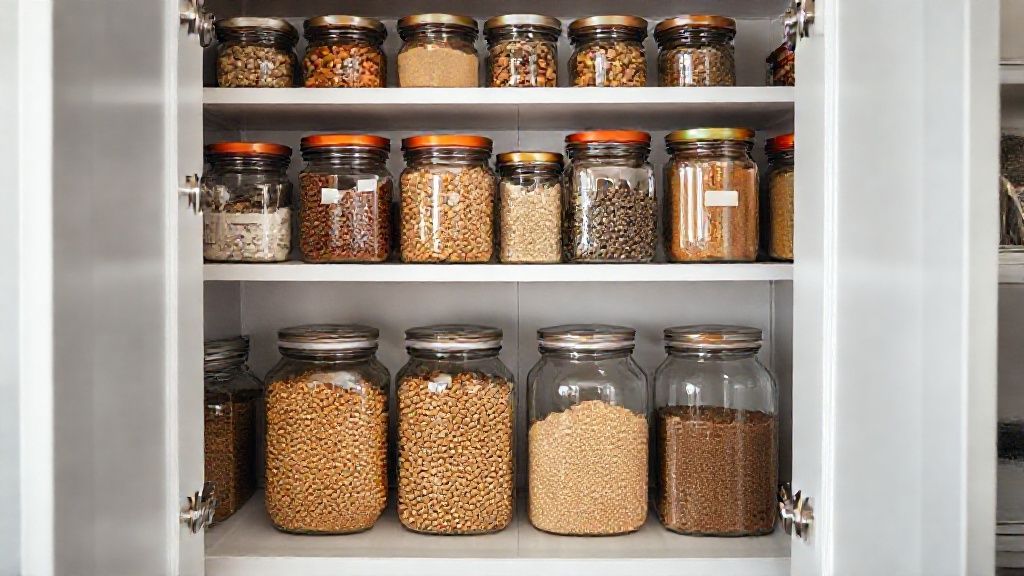
Bulk and jars: Transfer dry products (pasta, rice, flour, sugar, lentils) into square glass or plastic jars (space saving) and airtight. This avoids food moths and allows you to see instantly what is left. Note the expiration date and cooking time under the jar with an erasable marker.
Step 5
Fridge organization: Cold zone (often at the bottom): raw meat and fish. Cool zone (middle): dairy products, homemade cooked dishes. Vegetable drawer: washed fruits and vegetables. Door (least cold zone): drinks, sauces, butter, eggs. Never overload the fridge, cold air must circulate.
Frequently Asked Questions
Plastic boxes (Tupperware) ?
Everyone's nightmare. The solution: stack the boxes (open) inside each other by size on one side, and store ALL lids vertically in a bin or drainer inside the cupboard. No more hunting for the lost lid.
Precautions
- Clean the fridge regularly (vinegar).
- Do not store cleaning products with food.