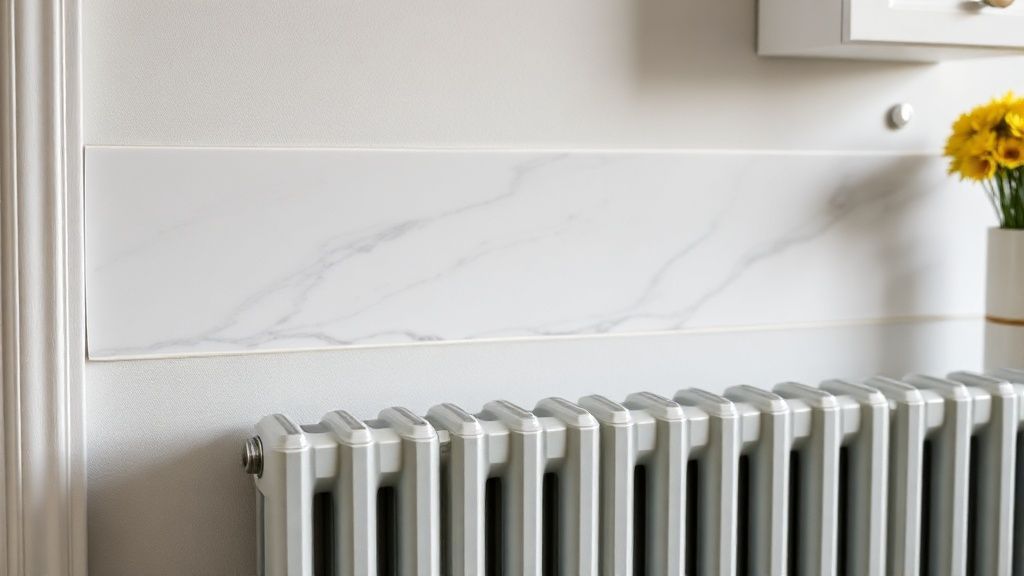
Bleeding your radiators: why and how to do it?
Are your radiators 'glou-glou'? Are they cold on top and hot on the bottom? There is air in the circuit.
Recommended Materials
- Purge key (or flat screwdriver)
- Small container (bowl)
- Cloth
Steps to follow
Step 1
Why purge? : Air naturally accumulates in the heating circuit. This air takes the place of the hot water at the top of the radiator (which remains cold) and prevents good circulation. Result: you heat less well, you consume more energy and the boiler wears out more quickly.
Step 2
The right time: The ideal is to do it once a year, in the fall, just before turning on the heating again. But you should also do it as soon as you hear water sounds (gurgling) or if a radiator is cold at the top and hot at the bottom.
Step 3
Preparation (Important): Turn off your boiler or put it in 'summer' mode (hot water only). Wait for the radiators to cool (so as not to burn yourself with boiling water). If you have a two-story house, always start with the bottom radiators and finish with the top ones (air rises).
Step 4
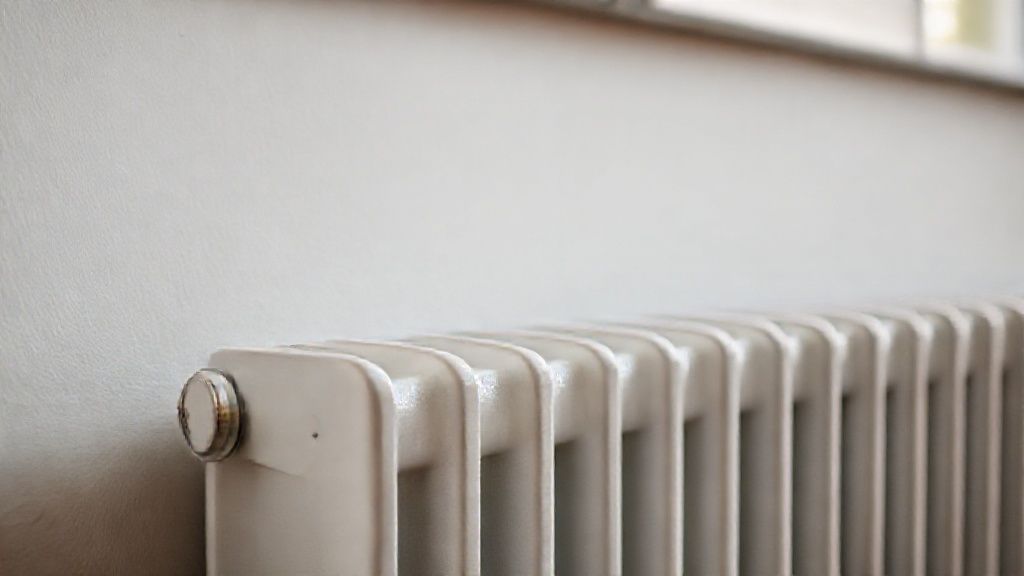
Bleeding: Locate the bleed screw (opposite the thermostatic valve, at the top of the radiator). Place a small container underneath. Using a bleeder wrench (square) or a flat screwdriver, gently unscrew the screw. You will hear a hissing sound (air coming out).
Step 5
Water arrives: Wait until the air is completely out. As soon as water begins to flow in a continuous stream (without spitting), immediately close the screw. Don't squeeze like a brute, it's fragile.
Step 6
Restore pressure (Crucial): By purging, you have removed air and a little water, so the pressure in the circuit has dropped. Go check your boiler. If the needle is below 1 bar, open the filling tap (often two small valves under the boiler) until it reaches 1.5 bar. Close the filling tightly.
Frequently Asked Questions
Is the water black or brown ?
It's completely normal, it's metal sludge. Don't try to drain the water until it is clear, you will empty the entire circuit! Leave that black water in.
Precautions
- Be careful, the water can be very hot if the heating has just been turned on.
- Protect the wall from dirty water splashes.