Sharpening your kitchen knives: sharpener or stone?
A knife that does not cut is dangerous (we force it and slip). Learn how to maintain them.
Recommended Materials
- Sharpening steel (for maintenance)
- Whetstone (for sharpening)
- Water
Steps to follow
Step 1
Understand the difference: 'To sharpen' (or sharpen) means to remove metal to recreate the cutting edge (with a stone). 'Straighten the edge' means straighten the edge of the blade (with a steel) so that it cuts better on a daily basis.
Step 2
The Rifle (Daily Maintenance): This is the ribbed steel rod. It is not used to sharpen a dull knife, but to maintain it. Hold the rifle vertically, point on the table. Place the base of the knife blade against the top of the rifle at a 20° angle (imagine you want to cut a thin slice from the rifle). Slide the blade down and toward you to the tip. Do this 5 times on each side of the blade before cooking.
Step 3
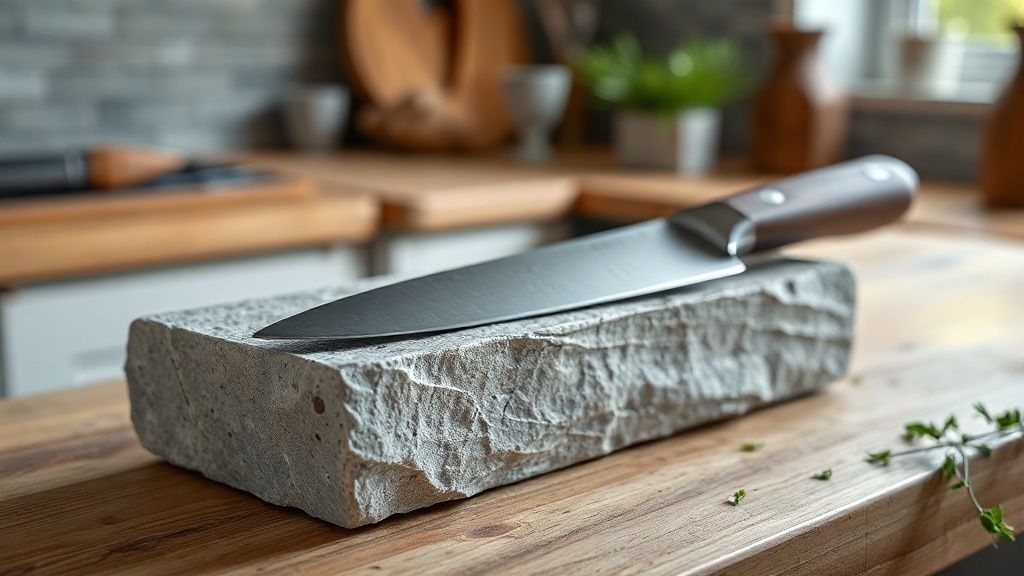
The Sharpening Stone (Repair): When the gun is no longer enough (the knife no longer cuts a tomato), you need the stone. Soak the stone in water for 10 minutes (so it doesn't get clogged). Place it on a damp cloth (non-slip).
Step 4
The action on the stone: Start with the 'Gros Grain' side of the stone. Lay the blade flat at an angle of 15-20° (the thickness of a thumb). Make back-and-forth movements along the entire length of the blade using moderate pressure. Do the other side. Finish with the 'Fine Grain' side to polish.
Step 5
The paper test: Take a standard sheet of paper. Hold it in the air. Try to cut it with the knife. If it cuts cleanly without tearing, it's a win.
Frequently Asked Questions
Dishwasher ?
PROHIBITED for good knives. Heat tempers the steel (makes it soft), chemicals attack the wire, and impacts against other cutlery dull it. Hand wash only!
Precautions
- Watch out for your fingers!
- Never catch a falling knife (step back).