Smart Water Leak Detectors: Avoid Water Damage
A water leak can cause thousands of euros in damage before becoming visible. Be alerted at the first drop thanks to these small sensors.
Recommended Materials
- Water leak sensors (Wi-Fi or Zigbee)
- Smartphone
Steps to follow
Step 1
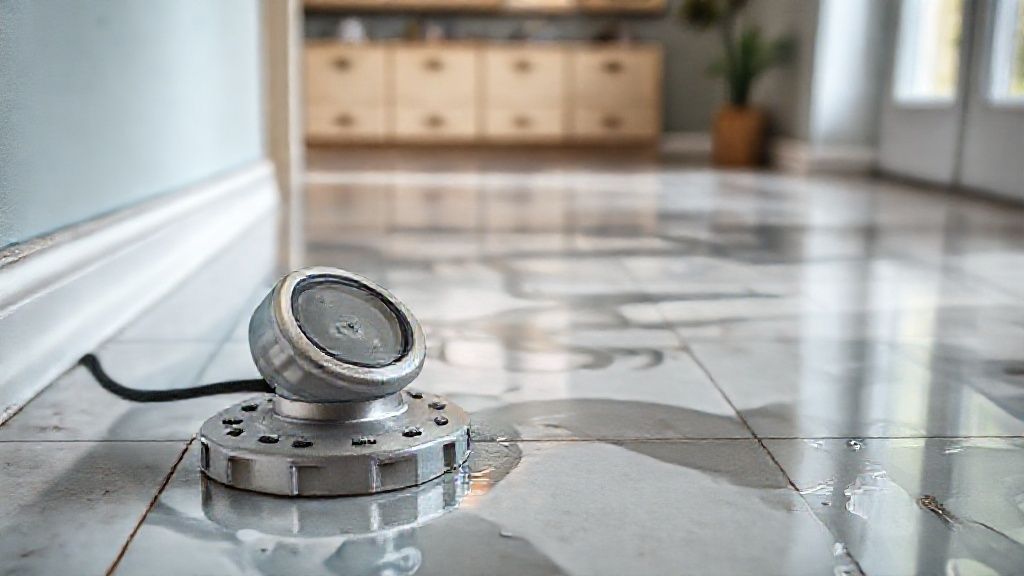
Smart water leak detectors are generally small, discreet pebbles equipped with two metal electrodes underneath. The principle is simple: as soon as water touches both electrodes simultaneously, the electrical circuit closes and the alert is sent.
Step 2
Place them in strategic high-risk areas: under the kitchen sink, behind the washing machine (often a source of leaks at the hose level), under the water heater, near the toilet, or at the lowest point of the basement.
Step 3
Connect them to your home automation hub or dedicated app (Wi-Fi or Zigbee). Test them immediately by placing a wet finger on the two sensors (it should beep and send a notification to your smartphone).
Step 4
Create an emergency scenario in your app: If leak detected -> Send a critical notification (which rings even in silent mode) + Flash connected lights in red + Sound the alarm siren to wake you up at night.
Step 5
To go further, the ultimate protection is to couple the detector with a motorized water shut-off valve. If a leak is detected, the home automation system automatically cuts off the main water supply to the house. This is the only way to avoid flooding if you are away.
Step 6
Test your scenarios: once installed, simulate a real leak (with a glass of water or a wet sponge) to verify that you receive the notification on your phone even on 4G, and that the siren sounds if you have configured one.
Frequently Asked Questions
What is the battery life ?
Often 1 to 2 years. These sensors consume very little energy because they are in standby 99.9% of the time. The app will warn you when the battery is low.
Is it useful if I am at home ?
Yes, absolutely. A slow leak under a built-in kitchen cabinet can take days or weeks to seep through the floor and become visible (often at the neighbor's downstairs!). The sensor detects it from the first millimeters of water.
Precautions
- Do not place the sensor on a conductive surface (metal) without insulation.
- Regularly check that the sensor has not been moved by a broom sweep.