Wash a Duvet in Machine Without Lumping
Washing your duvet yourself saves on dry cleaning. But be careful not to compress the filling. The tennis ball trick.
Recommended Materials
- Washing machine (7kg min capacity)
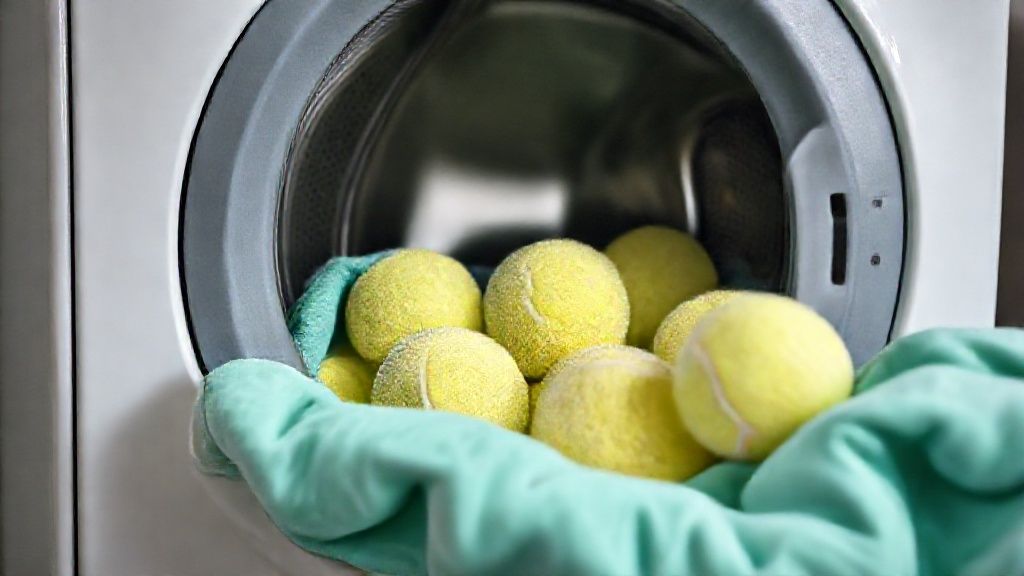
- 3 clean tennis balls
- Liquid detergent
- White vinegar
Steps to follow
Step 1
Check your machine's capacity. A double duvet (220x240) requires a 9kg machine or more. If you have to force like crazy to close the door, don't insist, you will break the machine or the duvet will be poorly washed. Go to the laundromat (18kg machines).
Step 2
Check that there are no holes in the duvet (otherwise the filling will escape and clog the pump). Sew up if necessary.
Step 3
Put the duvet in a ball in the drum without compressing it too much.
Step 4
Add 3 tennis balls (or rubber washing balls). They will hit against the duvet during washing to aerate it and prevent the down or synthetic from clumping into compact balls.
Step 5
Use little detergent (it rinses poorly in a thick duvet). Prefer liquid detergent which does not leave white marks.
Step 6
Program a 'Synthetic' or 'Delicate' cycle at 30°C or 40°C. Moderate spin (800 rpm max) to avoid tearing the fibers.
Step 7
Rinsing: program a double rinse if possible. Detergent poorly rinsed in the down can create yellow rings when drying and reduce the insulating power of the duvet. If you still see foam at the last rinse, restart a rinse/spin cycle.
Step 8
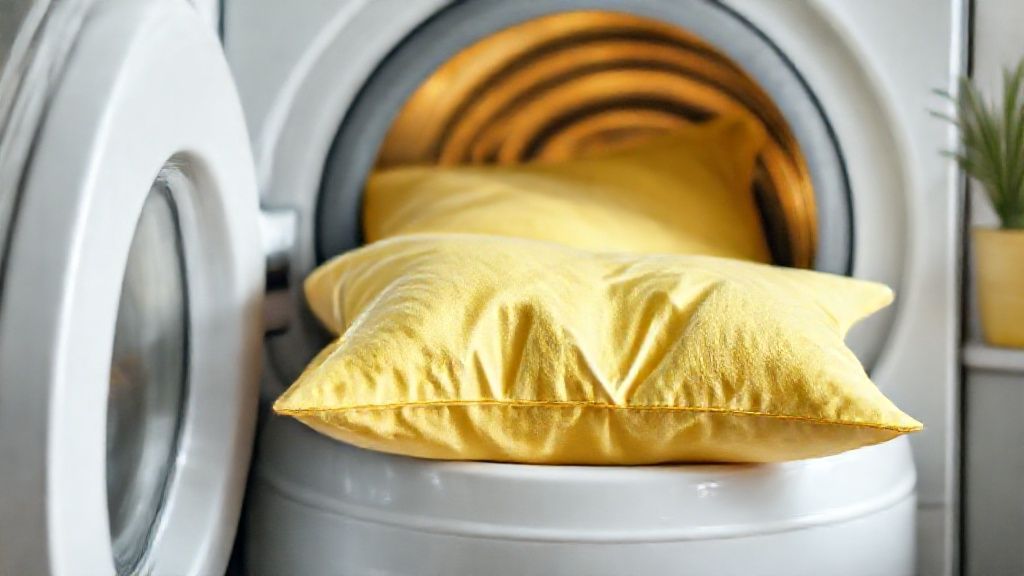
Drying: this is the longest and most important step. In the dryer (with tennis balls) is ideal to restore fluffiness. Otherwise, lay it flat outside in the sun, and turn/shake it regularly (every hour) to distribute the filling.
Frequently Asked Questions
Feathers or synthetic, is it the same ?
Synthetic dries quickly. Feathers must be dried very carefully (dryer almost mandatory) otherwise they rot and smell bad.
How often ?
Once or twice a year (at each change of season). Air it out the window the rest of the time.
Precautions
- Do not use powder detergent (leaves white marks).
- Ensure the duvet is 100% dry before storing (risk of mold).